Marble & Steel Room Divider
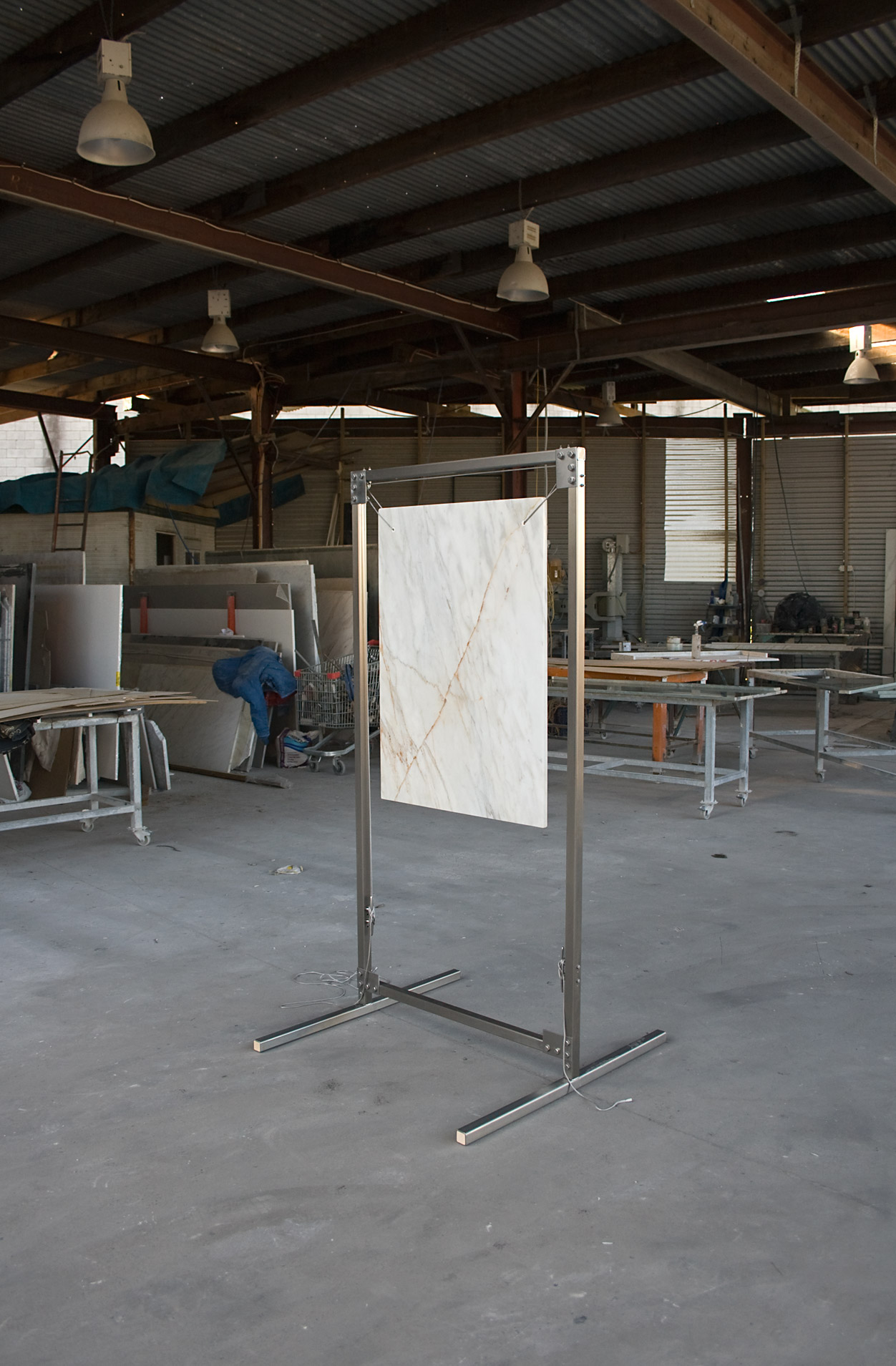
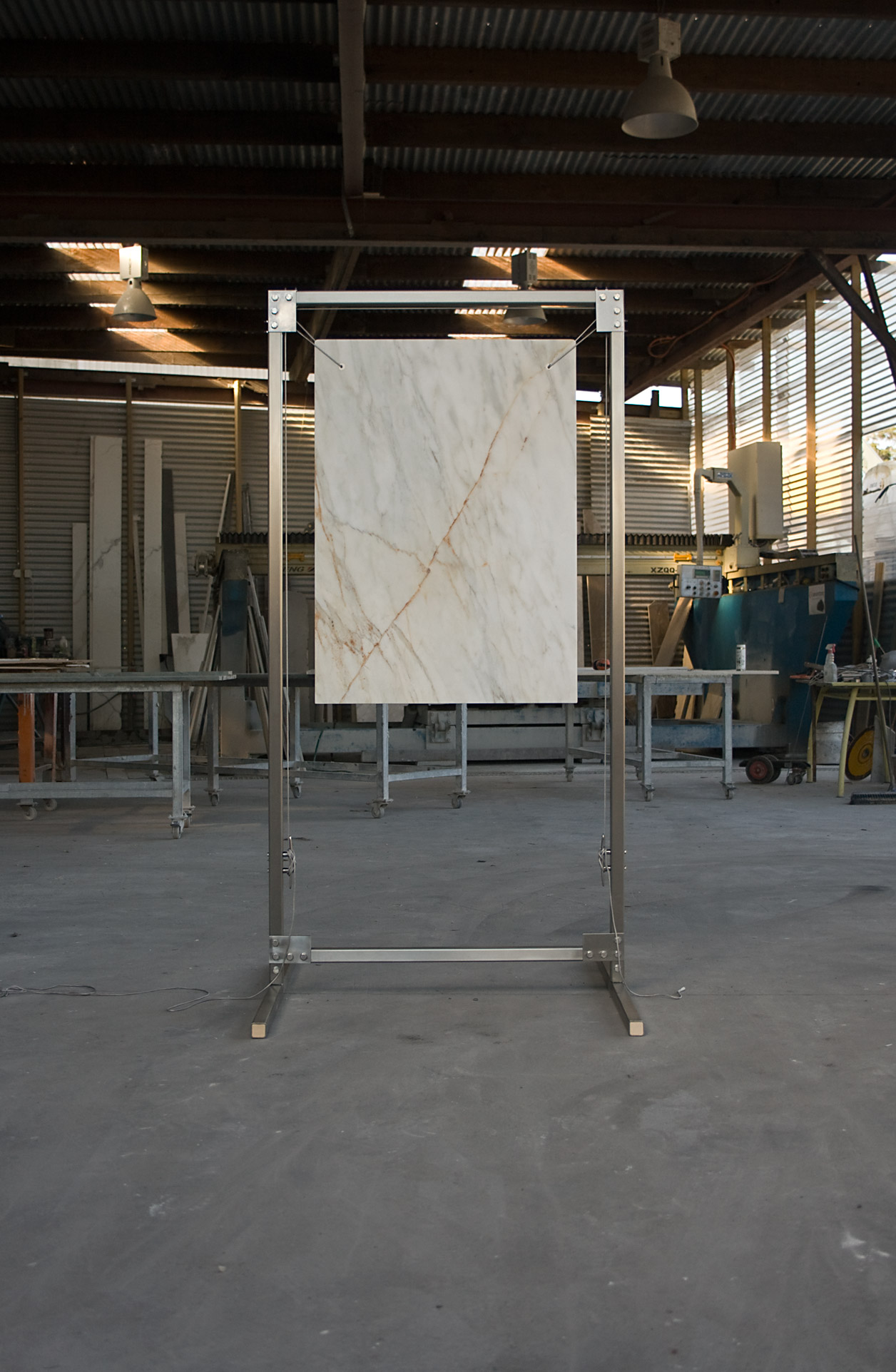
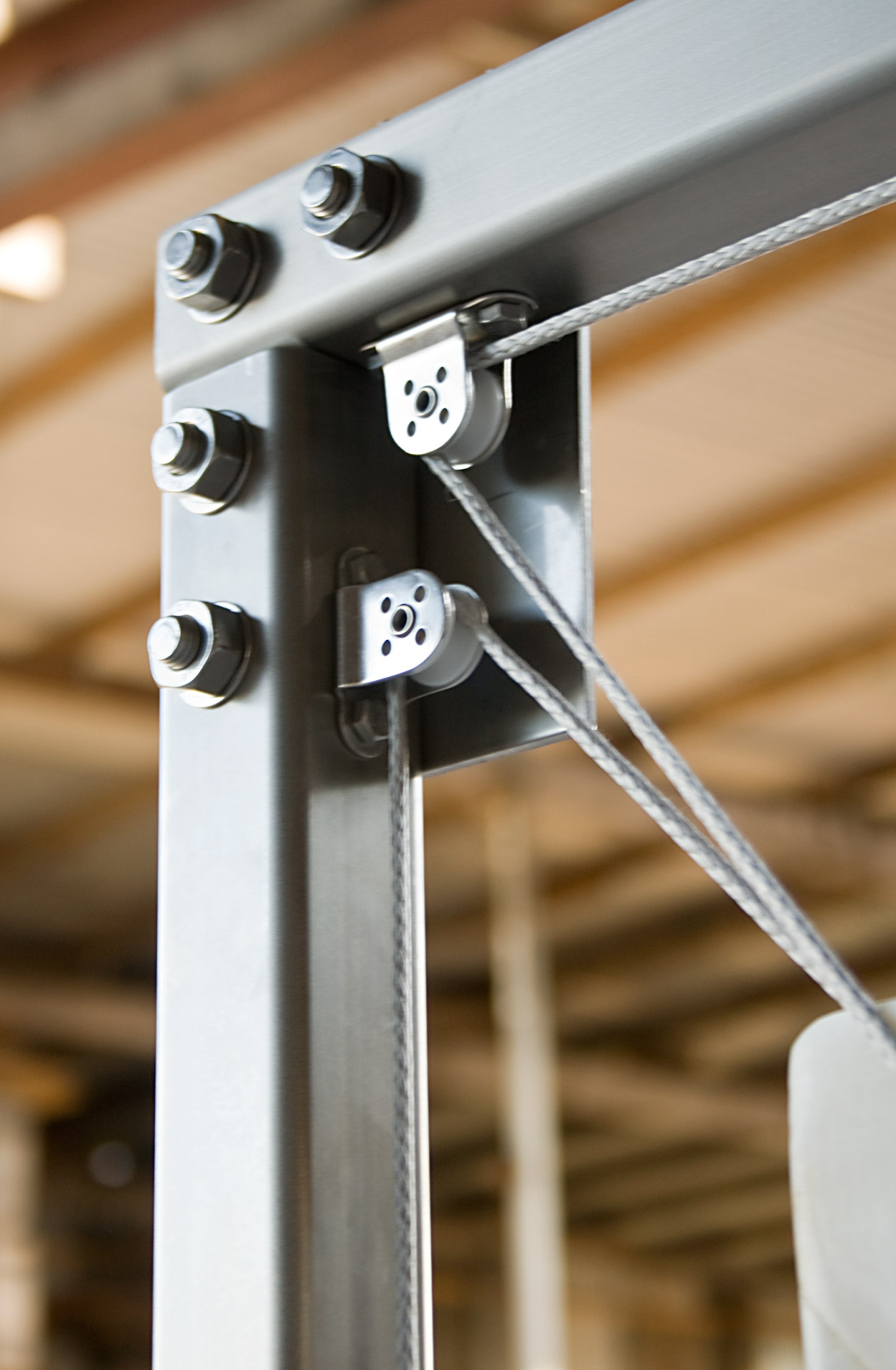
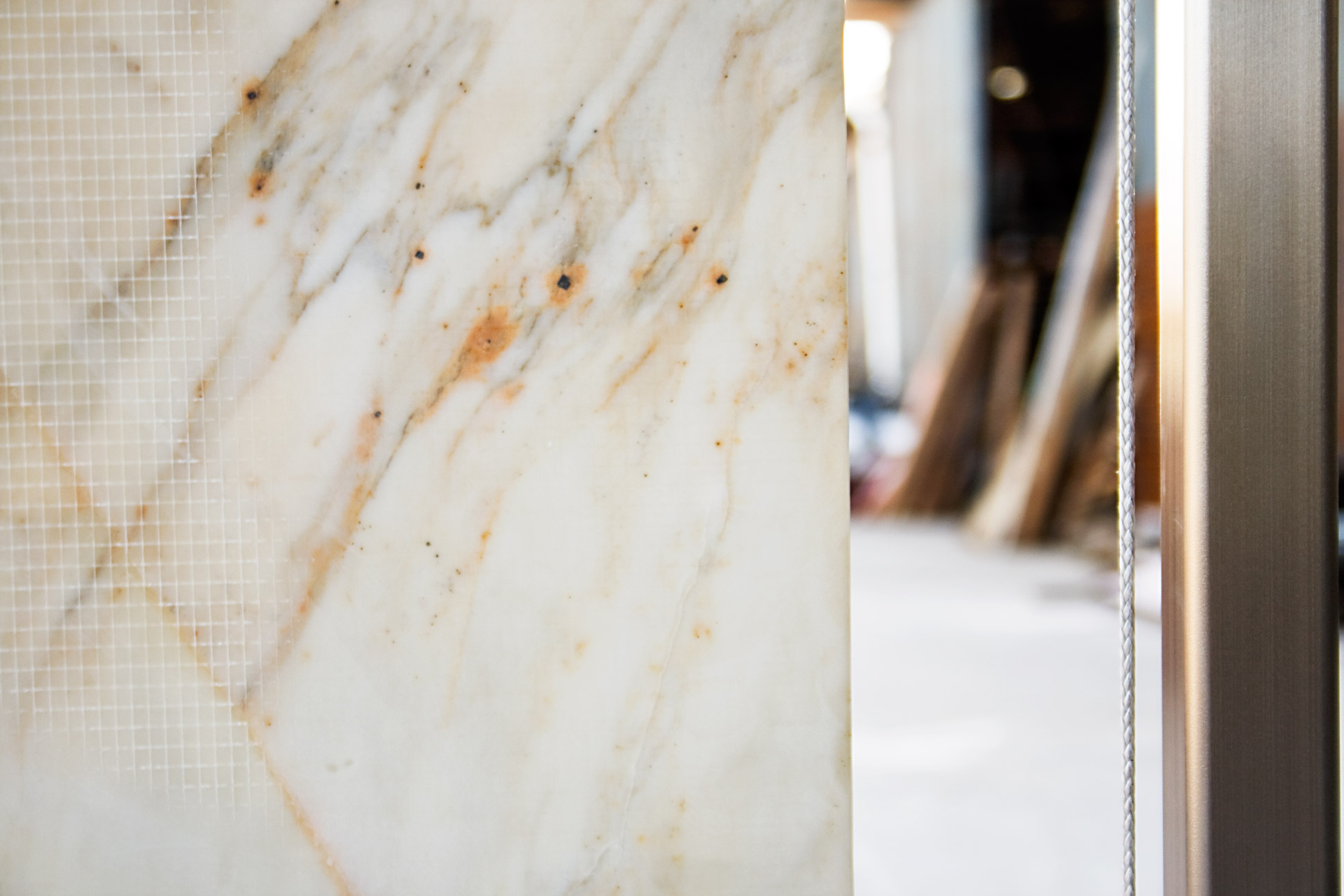
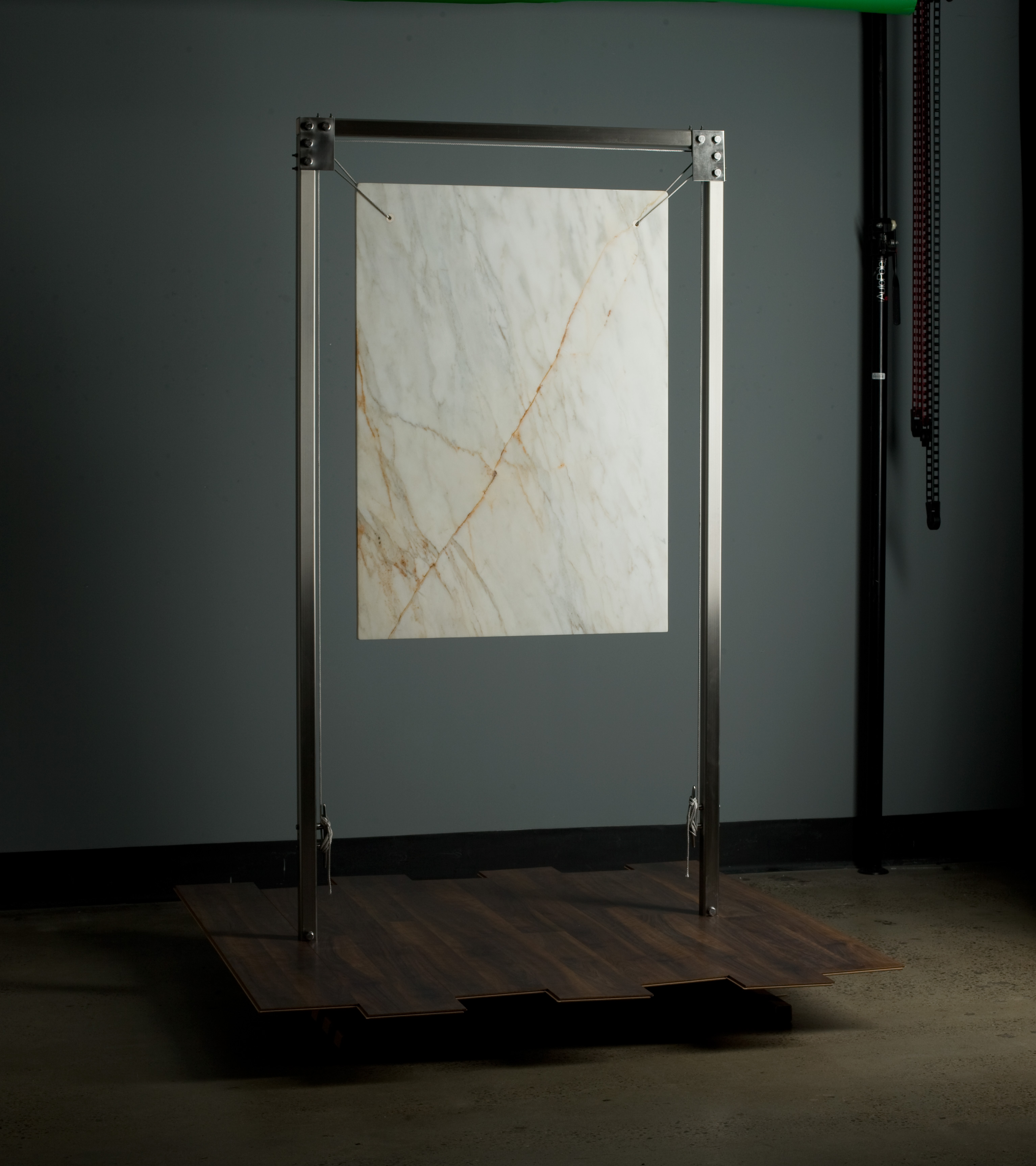
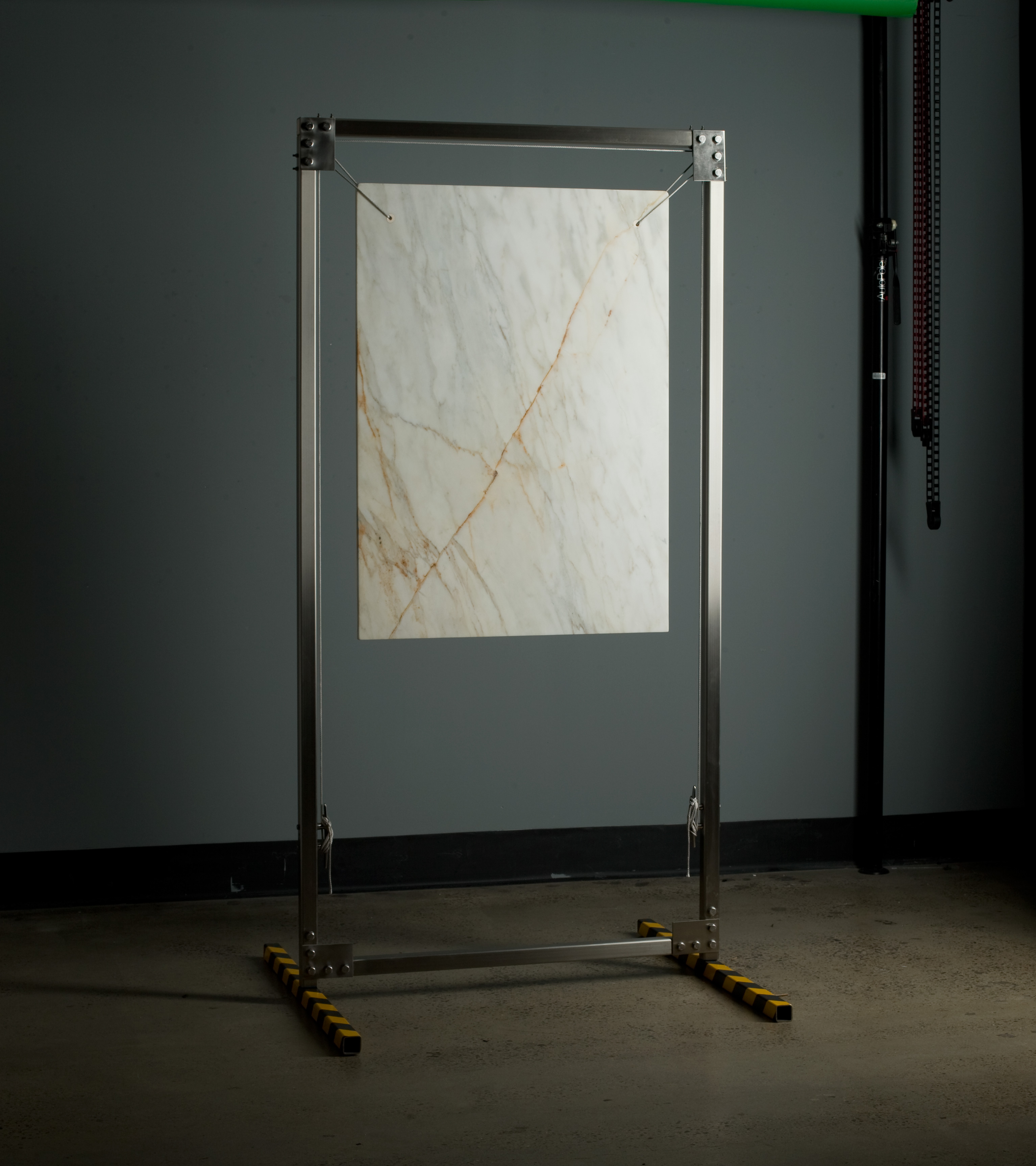
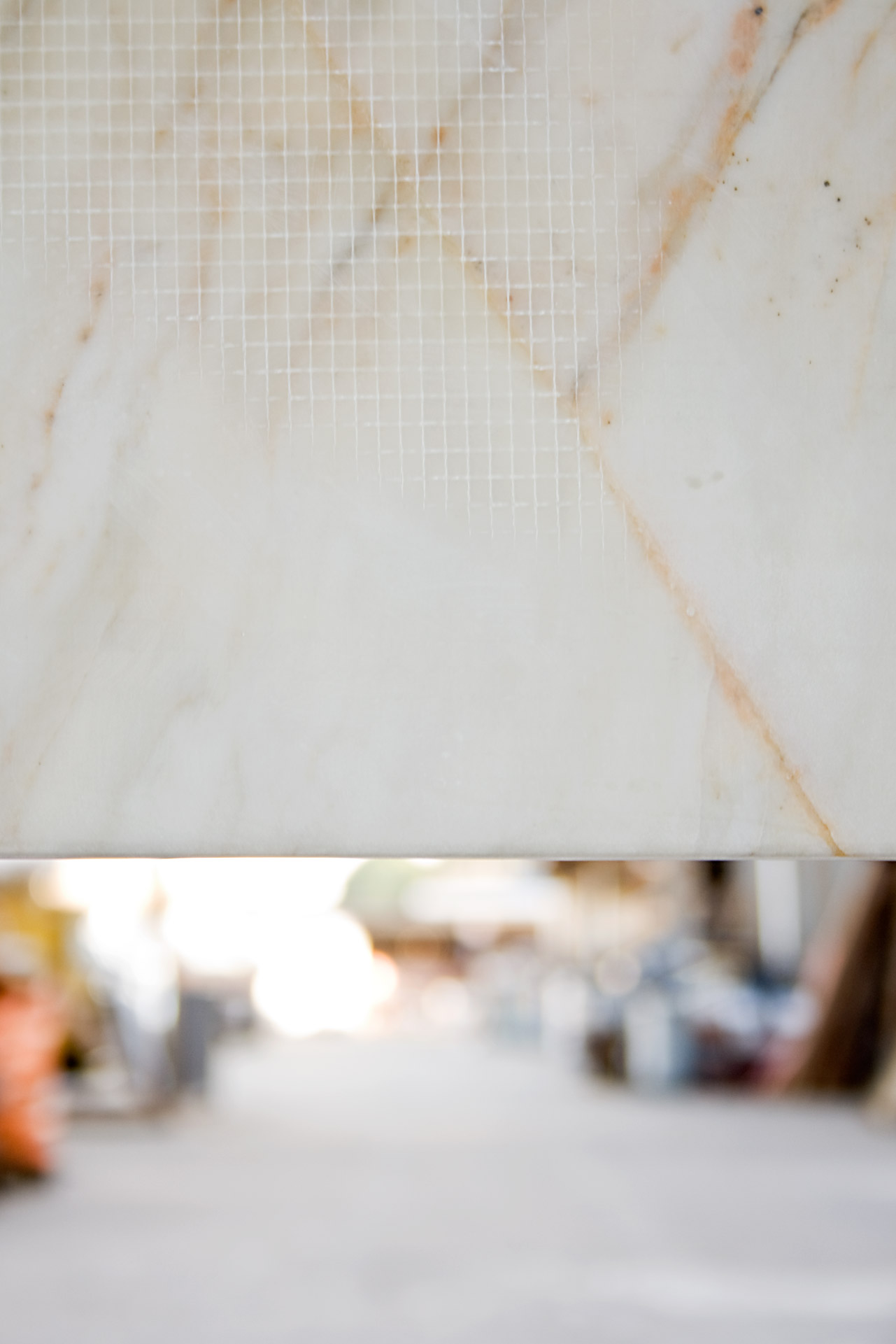
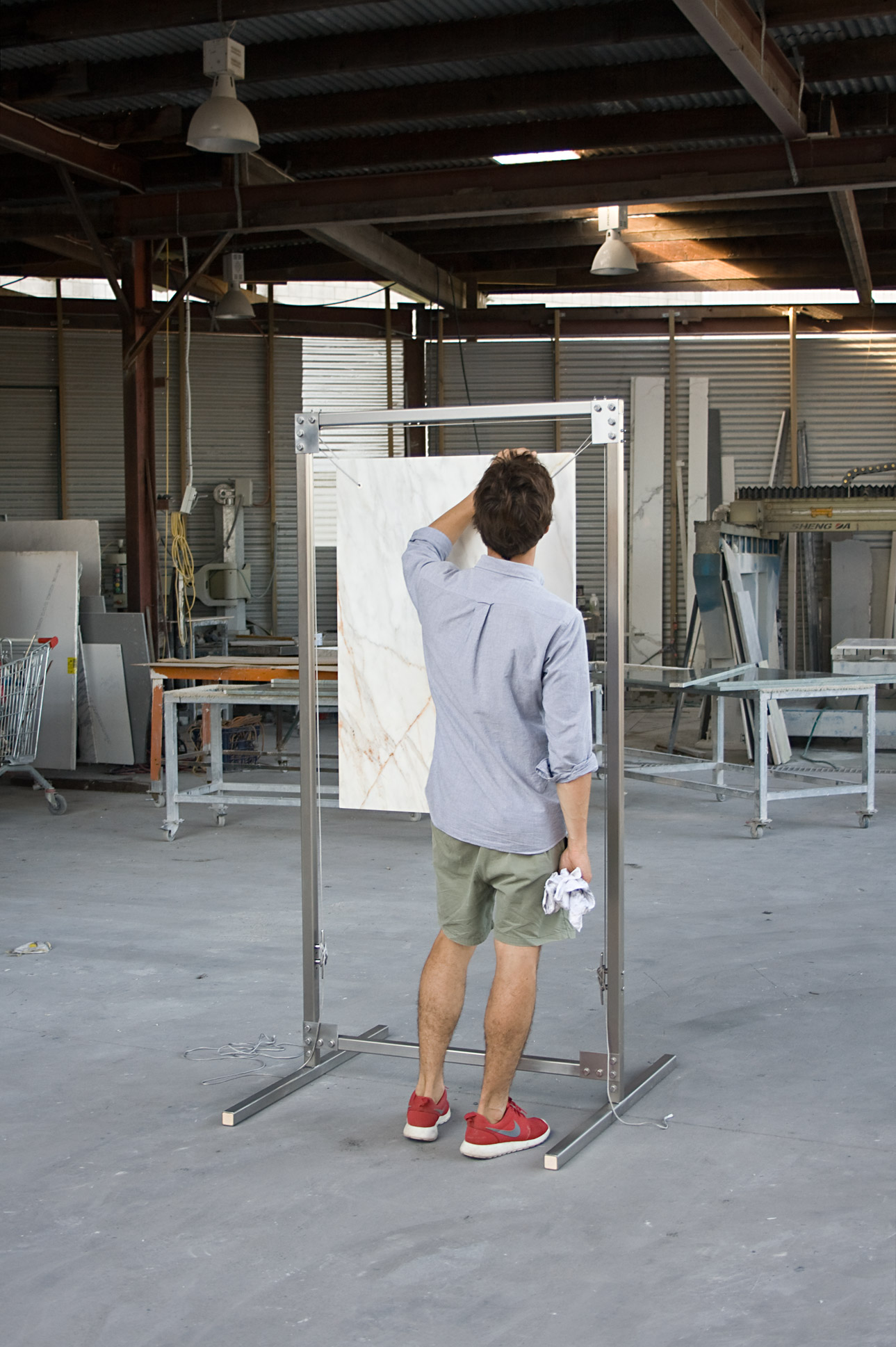
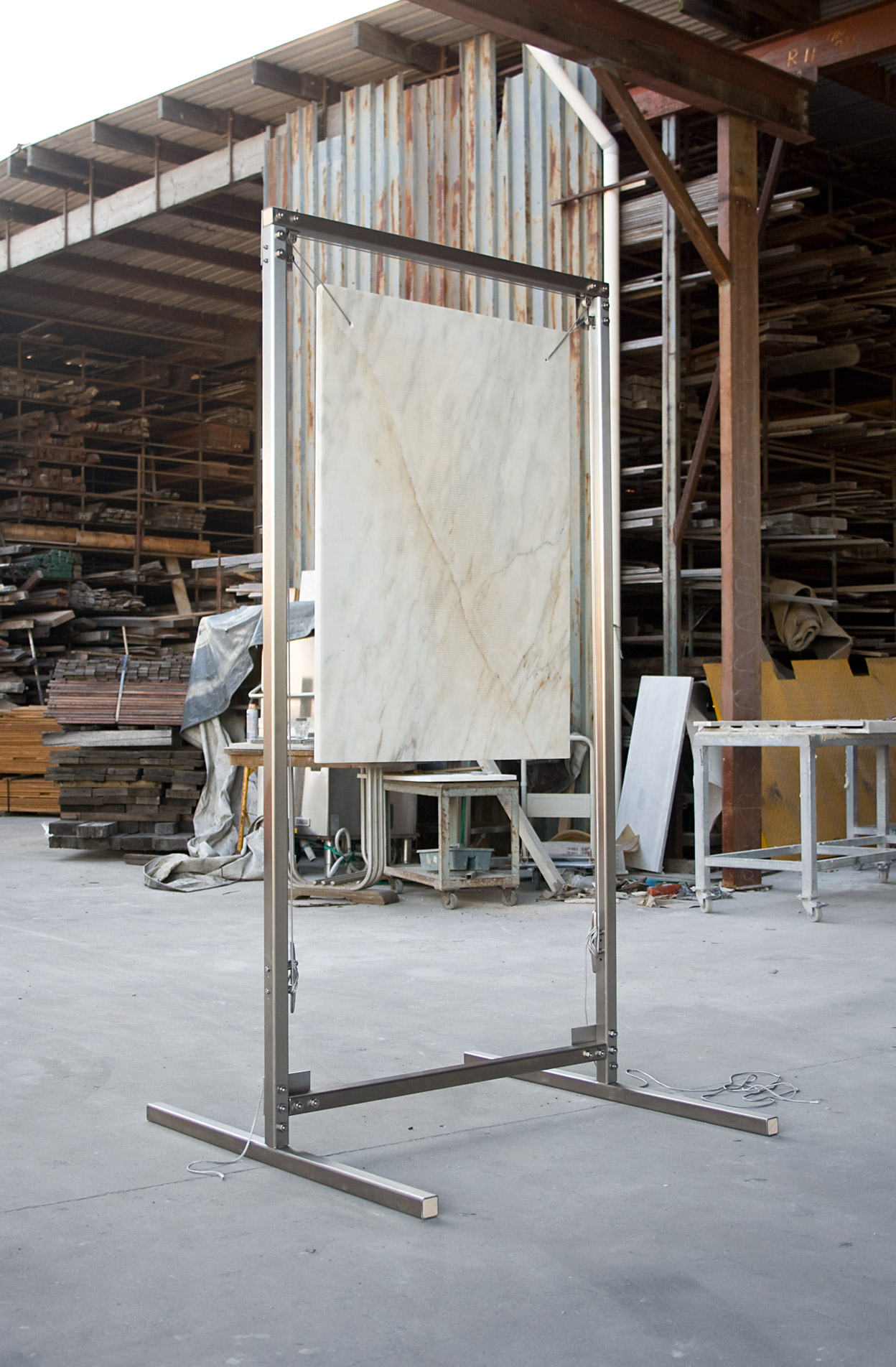
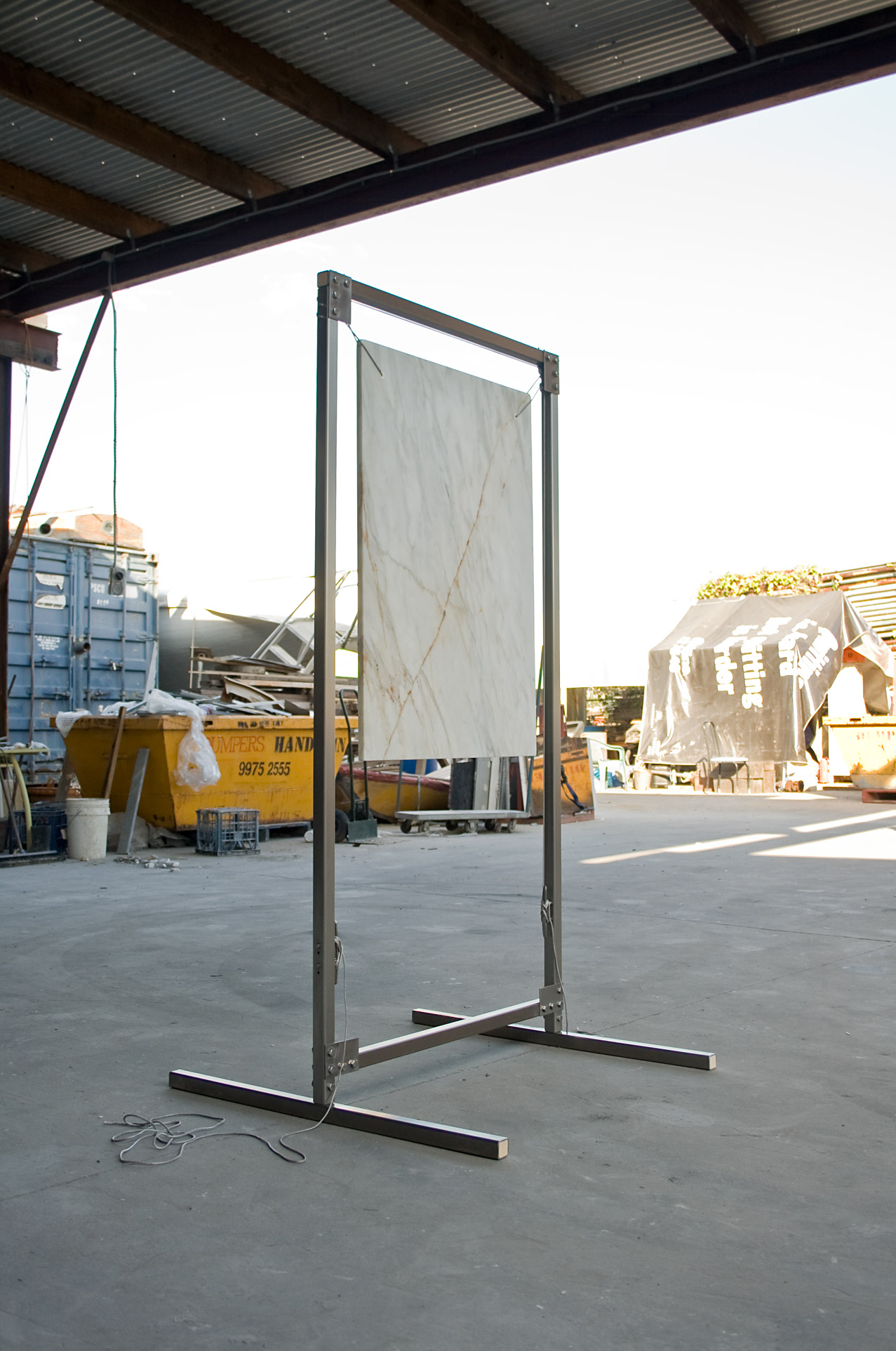
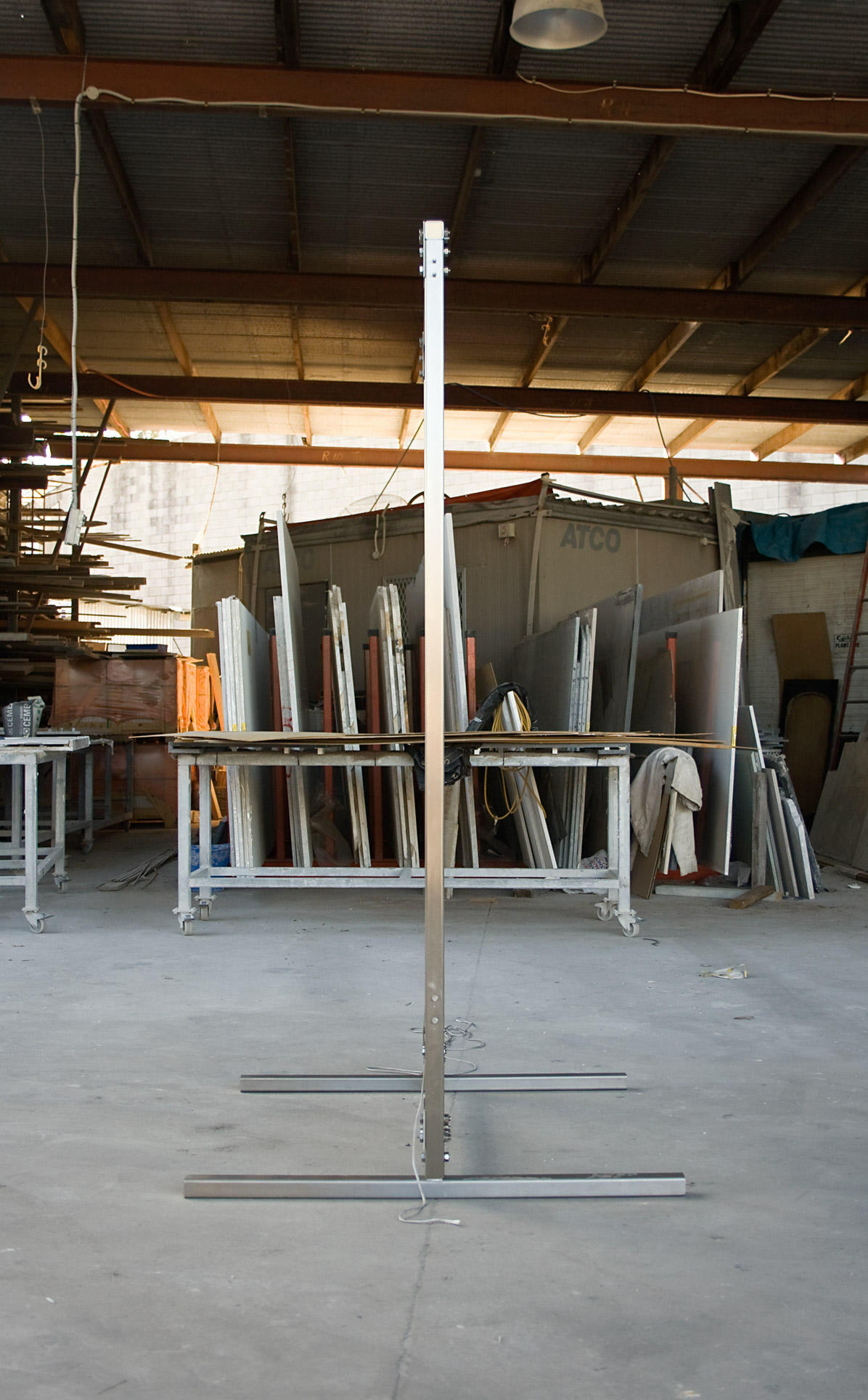
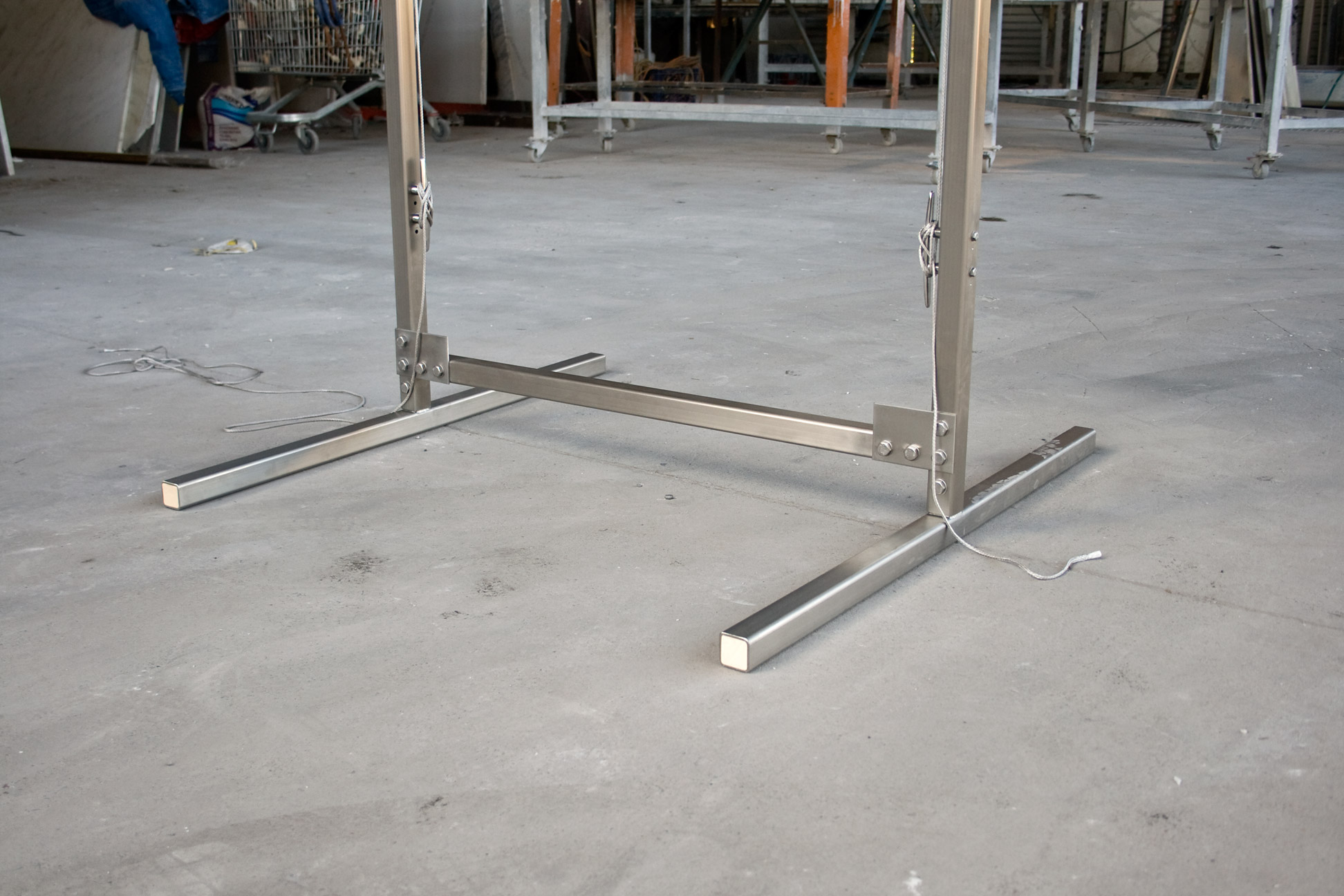
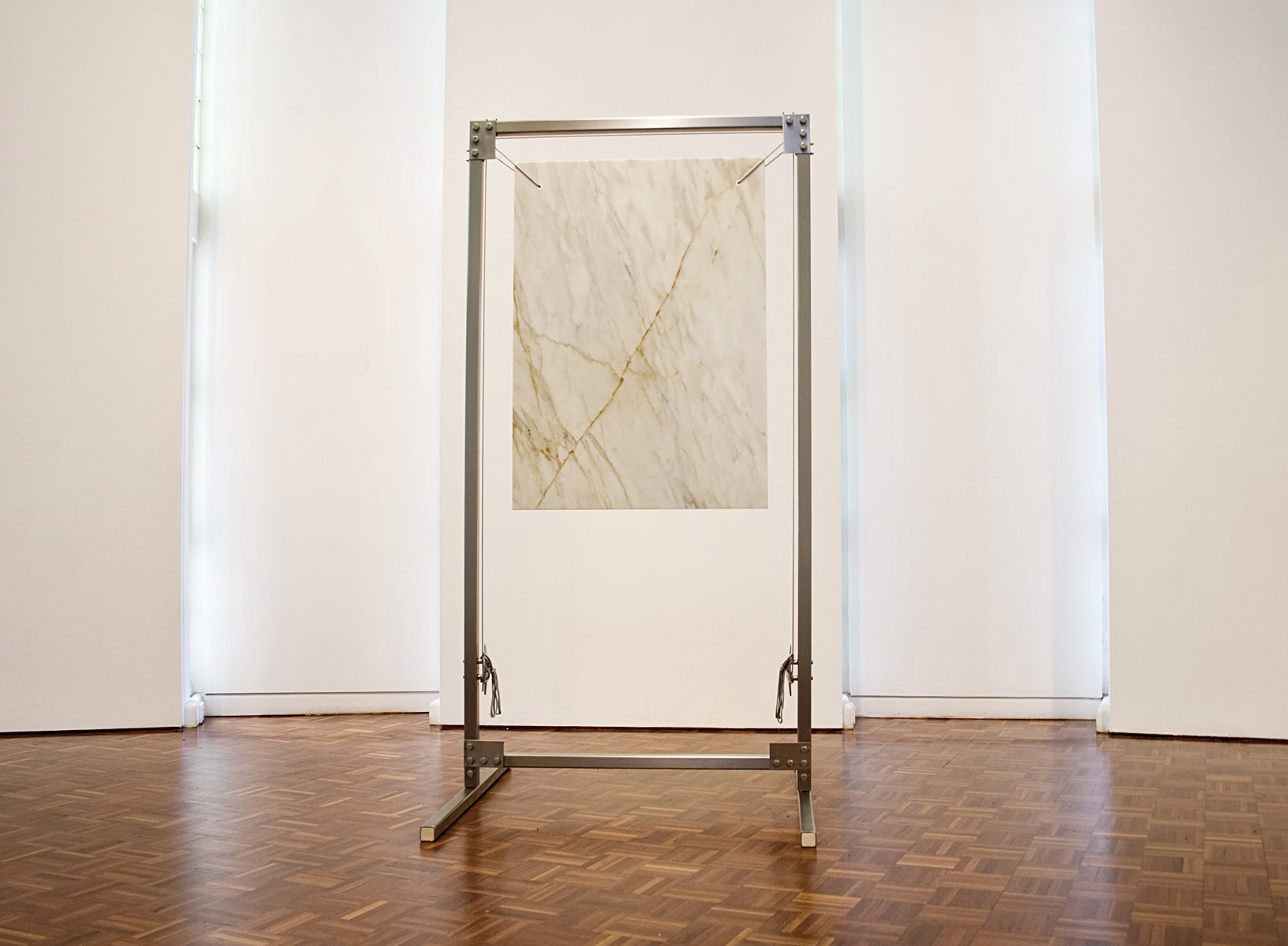
To become a room divider, the slab is mounted on a stainless steel frame and suspended via sailing hardware, an oblique reference to sea cargo. The slab is visible on both sides. On the back side, the fibreglass epoxy backing is partly ground off, to the minimum needed to hold the slab together. This produces a gradient between the raw slab and the backing where the gridded pattern of the backing is visible as an imprint. Its subtle and hard to see accurately in the photos, but in a way this is more interesting than the front which has a regular flat and honed finish. My intention with this work was reductive; every visual feature is stripped back to highlight the crack in the marble, so the work is more subdued than my usual approach.
However, the loosely tied cleats create visual/haptic tension, especially when viewed in public space. Unlike a knot which counteracts the tensile force with a kind of ‘stopping point’, the cleats can easily be untied in a few seconds with potentially dangerous results. This is sensed more when viewed in the gallery space, compared to the industrial workshop in which most of these photographs are taken, due the different way we assess the risk and safety profile of such spaces. In an industrial space, we are attuned to the movement of heavy objects, forklifts and power tools etc, so the threat of a falling slab of marble is modulated by that awareness. In a public space such as a gallery, this possibility is distinctly out of context and more threatening.
I write about these issues, and more, in an article for the journal Studio Research.